India is unlike anywhere else in the world for Buddhist practice. This is the land where the Buddha walked, taught, and attained enlightenment — where the Dharma was born and from where it spread across all of Asia. Today, after centuries of dormancy, Buddhist centres are flourishing once again across the subcontinent: from the snow-capped valleys of Himachal Pradesh to the sacred plains of Bihar, from the forests of Karnataka to the hills of Tamil Nadu.
This guide covers the best Buddhist retreat centres in India in 2026, organised by tradition and region. Whether you are looking for a silent Vipassana course, an immersive Tibetan Buddhism program, a Zen sesshin, or simply a few days near a sacred site, India has something profound to offer.
"To meditate in India is to meditate in the very soil where the Dharma was born. The land itself carries the blessing."
Vipassana Centres
Vipassana — insight meditation in the Theravada tradition — is practised at dedicated centres run by the S.N. Goenka organisation. Courses are free (dana-based), structured around 10 days of complete silence, and available in Hindi and English. India has more Vipassana centres than anywhere else on earth, and two of the most significant are in Bihar — the state where the Buddha himself lived and taught.
Vipassana · Igatpuri · S.N. Goenka · Dana
Dhamma Giri — Global Vipassana Pagoda
The largest Vipassana centre in the world, set in the hills of Igatpuri, Maharashtra. The Global Pagoda houses a meditation hall for 8,000 meditators. The original centre where Goenka taught for decades.
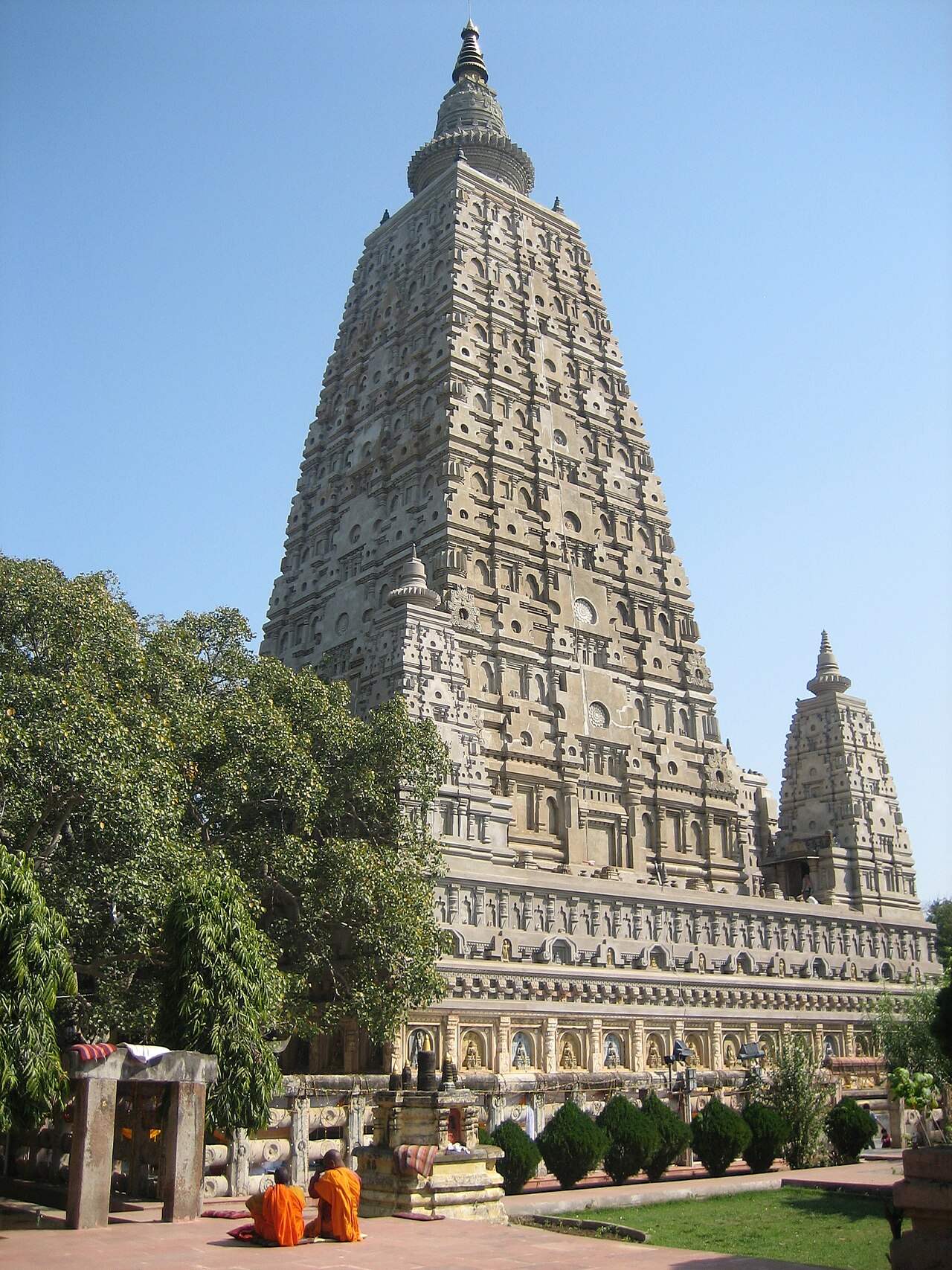
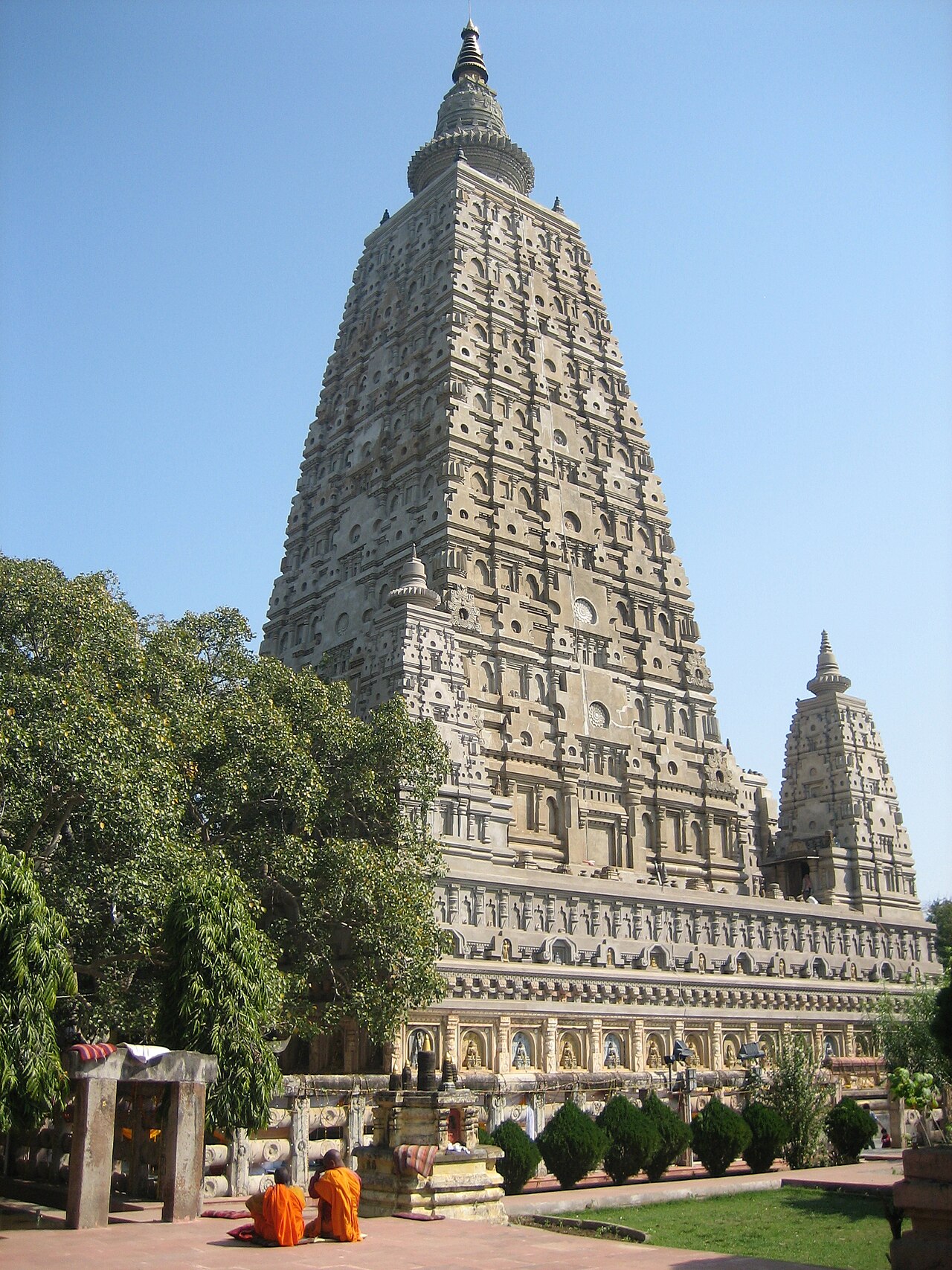
Situated minutes from the Mahabodhi Temple — where the Buddha attained enlightenment. Meditating here adds a dimension that no other Vipassana centre can offer. Courses run year-round.
Vipassana courses are free — all costs (food, accommodation, teaching) are covered by donations from previous students. You must apply in advance at dhamma.org. Courses fill up months ahead, especially at Bodhgaya and Igatpuri.
Tibetan Buddhist Centres
The Tibetan Buddhist tradition arrived in India following the Chinese occupation of Tibet in 1959, when His Holiness the Dalai Lama and tens of thousands of Tibetan refugees crossed the Himalayas. What followed was one of the most remarkable preservation efforts in religious history: monasteries, colleges, and practice centres were rebuilt in the foothills of Himachal Pradesh, Uttarakhand, Karnataka, and West Bengal. Today these centres offer programs in Tibetan language, Buddhist philosophy, meditation, thangka painting, and formal retreat to people from around the world.
FPMT — Tibetan Gelug Tradition
Tibetan Gelug · FPMT · Dharamsala · Himalaya
Tushita Meditation Centre
Perched in the pine forests above McLeod Ganj, Tushita runs the acclaimed 10-day Introduction to Buddhism course alongside Lam Rim retreats, Vajrayana programs, and intensive courses with senior Gelug teachers.
The seat of Yongey Mingyur Rinpoche in Bodhgaya. Programs in Tibetan language, Buddhist philosophy, and meditation in the Joy of Living tradition. Online and in-person courses.
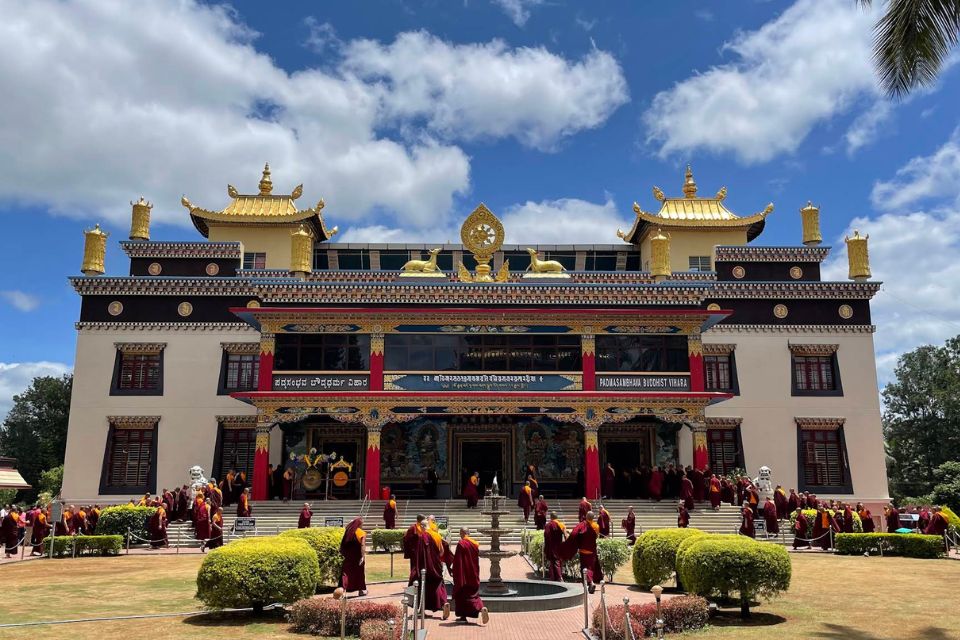
One of the most important Nyingma institutions outside Tibet, famous for its extraordinary Golden Temple with towering gilded Buddha statues. A place of profound beauty and active monastic life.
The Bir-Billing valley in Kangra district has become India's most concentrated hub of Tibetan Buddhist practice outside Dharamsala. Monasteries, meditation centres, and retreat houses dot the valley floor and hillsides, with the Dhauladhar range as a constant backdrop.
Buddhist Philosophy · DJKR · Bir · Vajrayana
Deer Park Institute
Founded by Dzongsar Khyentse Rinpoche in Bir. World-class programs in Buddhist philosophy, Vajrayana arts, Sanskrit, Tibetan language, and classical studies. The intellectual heart of Buddhist education in India.
A unique eco-retreat campus in Bir combining contemplative practice with permaculture, natural building, and earth stewardship. Sliding scale fees. A model for sustainable dharma living.
Founded by the legendary Ven. Tenzin Palmo — who spent 12 years meditating in a Himalayan cave — this nunnery in Tashi Jong is a beacon for women's Buddhist practice and full ordination.
India has a small but serious Zen presence, largely through the lineage of Father Ama Samy SJ — a Jesuit priest who trained for many years with Korean Zen master Yamada Koun Roshi and returned to India to teach. His two centres in South India have quietly produced serious Zen practitioners for over three decades.
Rinzai Zen · Ama Samy · Kodaikanal · Sesshin
Bodhi Zendo
Set at 1,700 metres in the Palani Hills above Kodaikanal. Founded by Father Ama Samy SJ. Regular sesshins (intensive Zen retreats), daily zazen, and personal dokusan (one-to-one with the teacher).
Sister centre to Bodhi Zendo, offering Rinzai Zen sesshins in a more accessible South Indian location. Zazen, kinhin (walking meditation), and dharma talks in the Yamada-Samy lineage.
A stunning sacred campus in the forests above Kalimpong, West Bengal. Connected to Dzongsar Khyentse Rinpoche's lineage. Seminars, retreats, and sacred architecture in a remote forest setting.
With so many options, narrowing the choice comes down to a few honest questions. First: what do you want to practise? If you have never meditated before, a structured Vipassana course or Tushita's Introduction to Buddhism program will serve you better than an intensive Zen sesshin. If you are already a practitioner, look for centres that teach in your own tradition.
Second: what time of year can you go? Many centres in Bihar (Bodhgaya, Dhamma Bodhi) operate only October to March due to the heat. Himalayan centres may close in deep winter (December–January). South Indian centres run year-round.
Third: dana or paid? Vipassana centres are fully dana-based and funded by previous students' gratitude. Tibetan and Zen centres typically charge modest fees that cover teachers, facilities, and food.
🗓 Best Time to Visit by Region
Bodhgaya / Bihar: October to March (cool season) · avoid May–September Himachal Pradesh (Bir, Dharamsala): March–June, September–November · avoid July–August (monsoon) South India (Kodaikanal): Year-round, cooler October–February Karnataka (Bylakuppe): October–March ideal