Tibetan Buddhist Retreat Centres in India — The Complete List
✍️ Nitesh Bhatie
📅 June 2026
⏱ 14 min read
When the Tibetan diaspora settled in India after 1959, it transplanted one of the world's most sophisticated contemplative traditions into a new country. Over six decades, the monasteries, shedras (philosophical colleges), and retreat centres built across India — from the foothills of Himachal Pradesh to the forests of Karnataka — have become some of the most important living institutions of Tibetan Buddhism in existence.
This guide lists the principal Tibetan Buddhist retreat centres in India by lineage: Gelug, Kagyu, Nyingma, and notes on Sakya. Within each lineage, we note location, the type of practice offered, and whether the centre accepts international participants.
"The purpose of a retreat is to tame the mind. The outer solitude simply supports the inner work." — Traditional Tibetan teaching
The Four Schools of Tibetan Buddhism
Tibetan Buddhism comprises four principal schools, all derived from Indian Buddhism transmitted to Tibet from the 8th century onwards. Each preserves distinct lineages of teaching and practice:
Gelug — Founded by Je Tsongkhapa (14th–15th century). Emphasises scholarship, Lam Rim (stages of the path), and tantra combined with rigorous philosophical study. The Dalai Lamas belong to the Gelug school.
Kagyu — The "Oral Lineage," transmitted through Marpa, Milarepa, and Gampopa. Famous for Mahamudra meditation and intensive three-year retreat practice. The Karmapas are its principal hierarchs.
Nyingma — The "Ancient Ones," tracing teachings to Guru Padmasambhava in the 8th century. Dzogchen (Great Perfection) is its pinnacle teaching.
Sakya — Known for its Lamdre (Path with Its Result) teaching. Less represented in India than the other schools, but Sakya centres exist in Dehradun and Mysuru.
📖 Which School Should I Choose?
For beginners, the school matters less than finding a qualified teacher and a programme that suits your level. The Gelug centres (especially Tushita and Root Institute) are most accessible for newcomers with well-structured introductory courses in English. Kagyu and Nyingma centres are equally welcoming but tend to expect some existing familiarity with Buddhist basics.
Gelug Centres
📿
Gelug Lineage
Lam Rim · Tantra · Philosophical Study · FPMT Network
The Gelug school runs the largest network of international retreat centres in the world through the Foundation for the Preservation of the Mahayana Tradition (FPMT), co-founded by Lama Yeshe and Lama Zopa Rinpoche. In India, two flagship FPMT centres offer some of the most structured English-language programs available.
FPMT · Gelug · Dharamsala · Himalaya
Tushita Meditation Centre
India's most popular Tibetan Buddhist retreat centre for international visitors. The 10-day Introduction to Buddhism course runs monthly and routinely sells out within hours of registration opening. Senior FPMT teachers give Lam Rim, Tantra, and Sutra programs. Set in pine forest above McLeod Ganj.
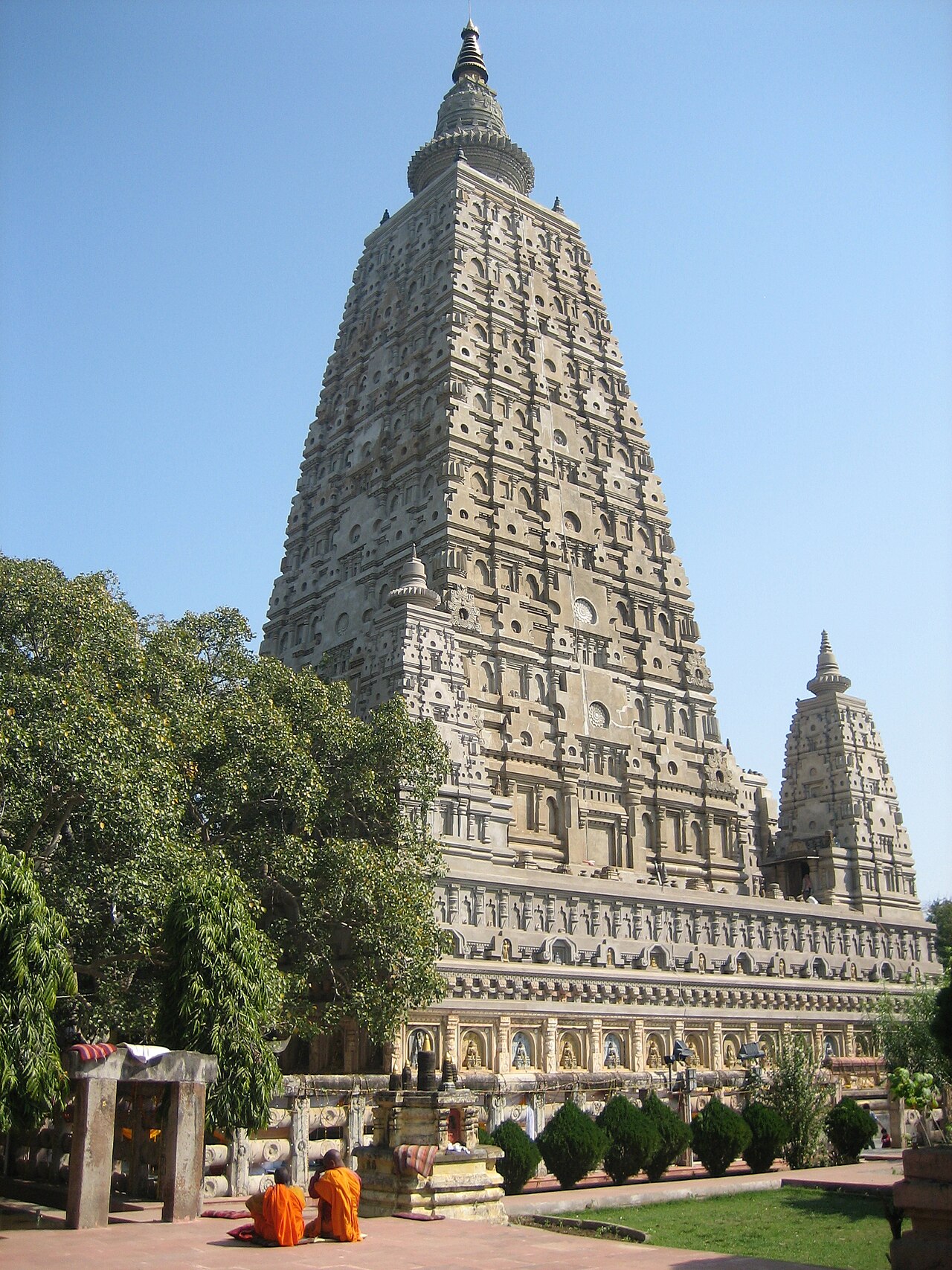
Located at the most sacred site in Buddhism — a short walk from the Mahabodhi Temple where the Buddha attained enlightenment. Root Institute runs comprehensive FPMT programs, including week-long and 10-day meditation and study retreats, with the added power of proximity to Bodhgaya's monasteries and stupas.
The Kagyu school is particularly associated with intense retreat practice. Milarepa — Tibet's most celebrated yogi — was a Kagyu practitioner who spent decades meditating in mountain caves. This spirit of total commitment to practice continues in Kagyu centres today. The Tergar network, founded by Mingyur Rinpoche, is one of the most accessible entry points into Kagyu practice for contemporary practitioners.
Kagyu · Tergar · Bodhgaya · Mingyur Rinpoche
Tergar Monastery
The flagship monastery of the Tergar network, founded by Yongey Mingyur Rinpoche — author of "The Joy of Living" and one of the most beloved Tibetan teachers working with Western practitioners. Located in Bodhgaya, with a worldwide Tergar community connected online. Annual retreats in Bodhgaya, especially in winter when the Tibetan monastic community convenes at the site.
Drukpa Kagyu · Nunnery · Tashi Jong · Tenzin Palmo
Dongyu Gatsal Ling Nunnery
Founded by Venerable Tenzin Palmo — the English nun who spent 12 years in a Himalayan cave and now runs this Drukpa Kagyu nunnery near Tashi Jong in Himachal Pradesh. The centre is dedicated to full Tibetan Buddhist training for nuns. Visits and short stays by prior arrangement. An inspiring place at any level of practice.
Dzogchen · Treasure Teachings · Guru Yoga · Padmasambhava
The Nyingma school preserves the oldest strand of Tibetan Buddhism, tracing its origins to Guru Padmasambhava (Guru Rinpoche) and his disciples who first transmitted the Dharma in Tibet during the 8th century. Its pinnacle teaching, Dzogchen, is considered by its practitioners to be the most direct path to recognition of the nature of mind. In India, the largest Nyingma community is settled in Bylakuppe, Karnataka, where the Namdroling monastery has become one of the most spectacular Buddhist complexes in South Asia.
Nyingma · Bylakuppe · Karnataka · Dzogchen
Namdroling Monastery
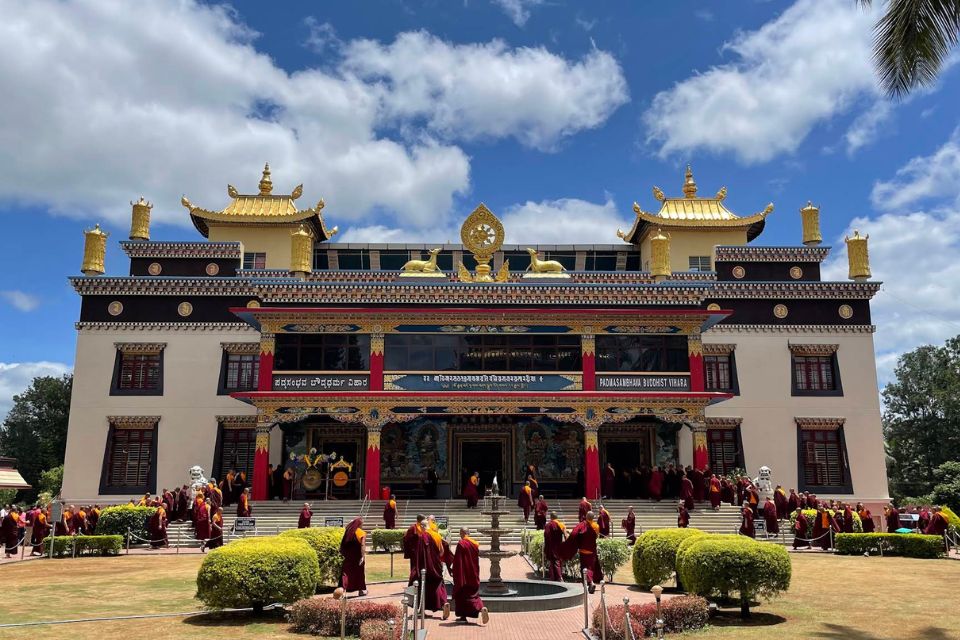
The Golden Temple complex at Namdroling in Bylakuppe is one of the most remarkable Buddhist sites outside Tibet. Founded by Kyabje Drubwang Pema Norbu Rinpoche, it houses the largest collection of Buddhist statues in India. Retreat programs include Dzogchen, Nyingma tantric cycles, and seasonal teachings by resident masters. The surrounding settlement is a thriving Tibetan refugee community.
Beyond the school-specific retreat centres, Himachal Pradesh hosts several institutions dedicated to Buddhist education and contemplative practice that draw students from multiple lineages.
DJKR · Vajrayana · Bir · Multi-lineage
Deer Park Institute
Founded by Dzongsar Khyentse Rinpoche, Deer Park in Bir offers the widest academic curriculum of any Buddhist study centre in India — Madhyamaka, Prajnaparamita, Abhidharma, Tibetan, Sanskrit, Buddhist art. Teachers span multiple lineages. Seasonal intensive programs; all are in English or translated.
Most Tibetan centres in India follow a loose annual rhythm: Spring (March–May) and Autumn (September–November) are peak teaching season. Major rinpoches typically give public teachings in winter in Bodhgaya (December–February), when the Tibetan monastic community converges there. McLeod Ganj teaching schedules follow the Dalai Lama's calendar, announced on dalailama.com.